Episode 186
Dobro jutro drugovi!
We’ve got an artistically stimulating lesson for you today!
Let’s learn the Croatian words for certain types of artists.
Uncle Mike is a huge supporter of interpretive dancing.
Did it make our list?
Lesson
Artist - umjetnik
Painter - slikar (Slava Raškaj - watercolor at turn of 1900s)
Sculptor - kipar (Ivan Mestrović - Bowman and Spearman, Mladen Mikulin - Jim Morrisson)
Poet - pjesnik (Grigor Vitez - children’s poetry)
Composer - skladatelj (Ðelo Jusić - song composer Dubrovački Trubaduri)
Photographer - fotograf (Tošo Dabac - black & photos of Zagreb during Depression)
Architect - arhitekt (Nikola Bašić - Pozdrav Sunce & Morske Orgulje)
Installation artist - umjetnik instalacija (Maja Petrić - We are Made of Light, shown in exhibits around Seattle)
Super Slatko Report
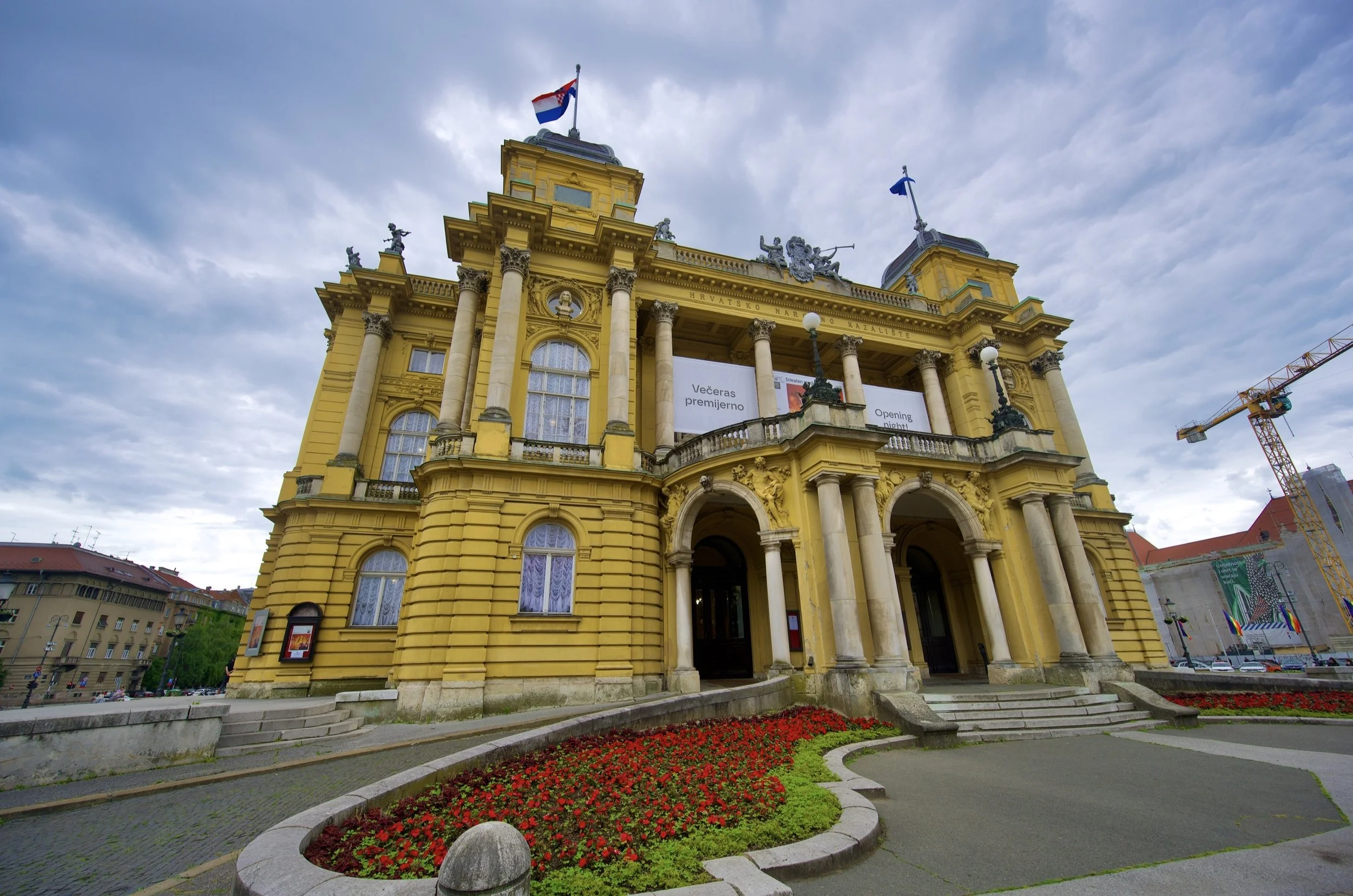
In this edition of the Super Slatko Report, DJ Moe will tell us about the Hrvatsko Narodni Kažalište aka the Croatian National Theater in Zagreb. There’s a lot of information to cover and DJ Moe does not skip a beat!
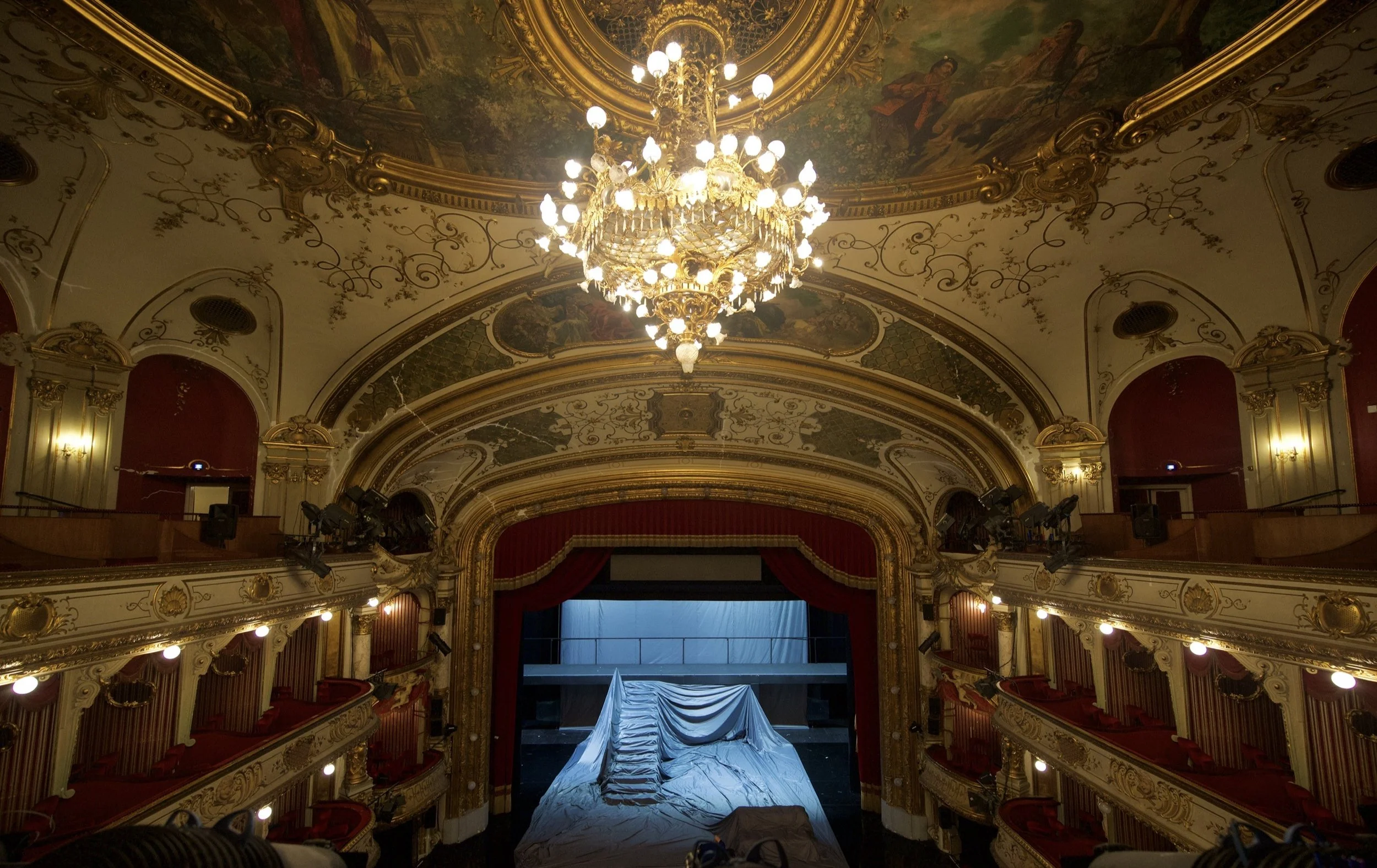
There are buildings that host the fine arts, and then there are buildings that look fine art. Zagreb’s Croatian National Theatre (Hrvatsko narodno kazalište) or the HNK — definitely falls to the second group. Sitting proudly at 15 Republic of Croatia Square in Zagreb’s Lower Town, or Donji grad, the bright yellow theatre that anchors one of the grandest pieces of the city’s 19th-century urban plan. Nearby you’ll find the Academy of Dramatic Art roughly 0.1 kilometer away, (about 0.06 of a mile); the University of Zagreb’s historic Rectorate at roughly 0.15 kilometers away, (0.09 miles); and the Mimara Museum about 0.28 kilometer to the southwest, (0.17 miles). The theatre’s immediate surroundings are practically an arts district, with the Music Academy and Museum of Arts and Crafts also in the area. But the HNK wasn’t Zagreb’s first proper theatre. Its predecessor was the Stanković Theatre in the Upper Town, opened in 1834 and capable of holding more than 750 people. By the late 1800s, however, Zagreb had outgrown it: opera had been established in 1870, ballet followed in 1876, and the old building simply couldn’t keep pace technically. Then 1880 a Zagreb earthquake significantly damaged it forcing a decision. It was then that plans for a replacement theatre were accelerated, and although the old theatre was eventually converted to government use rather than demolished, Zagreb was ready for a new stage, a site worthy of a growing European capital.
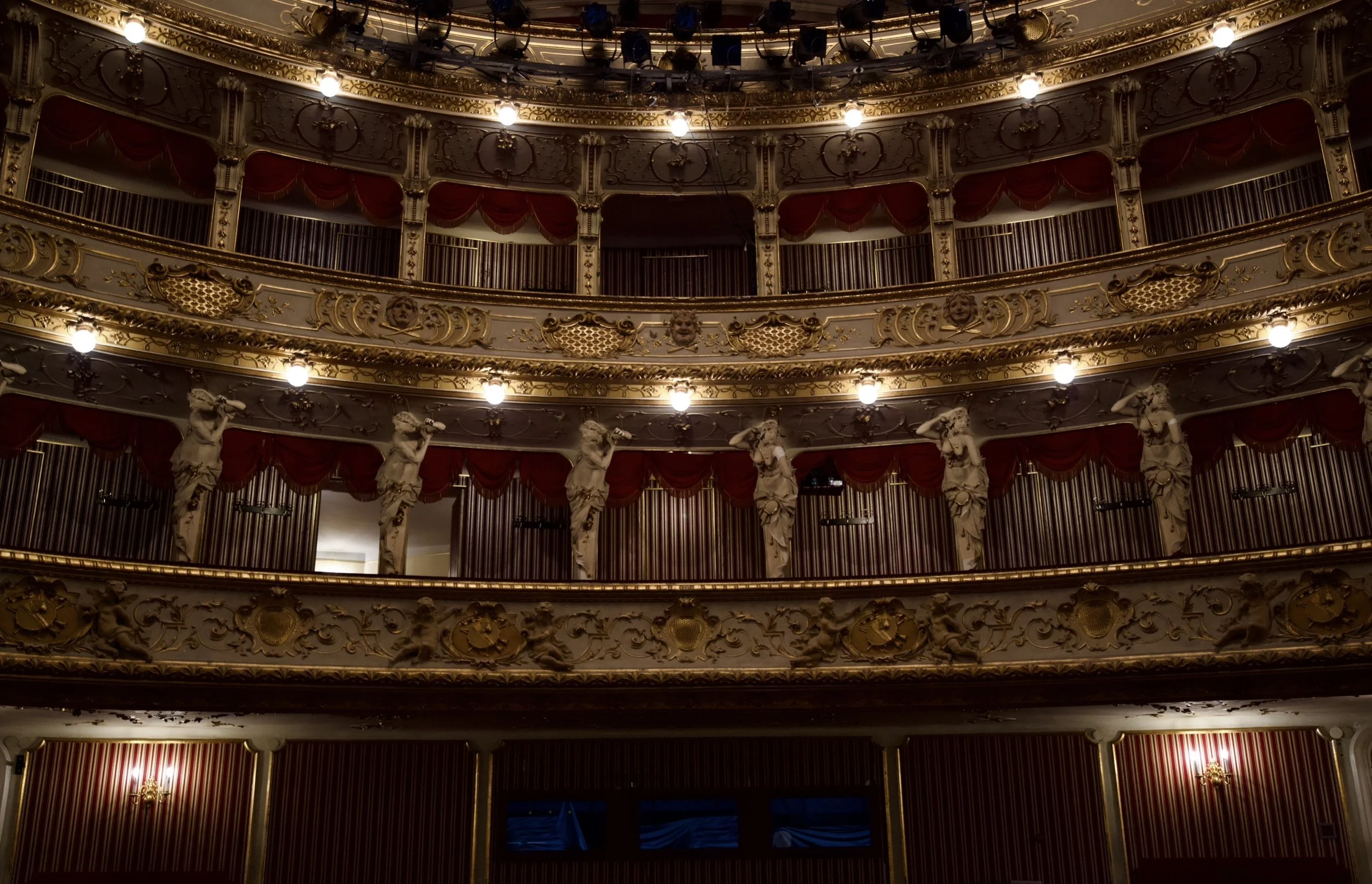
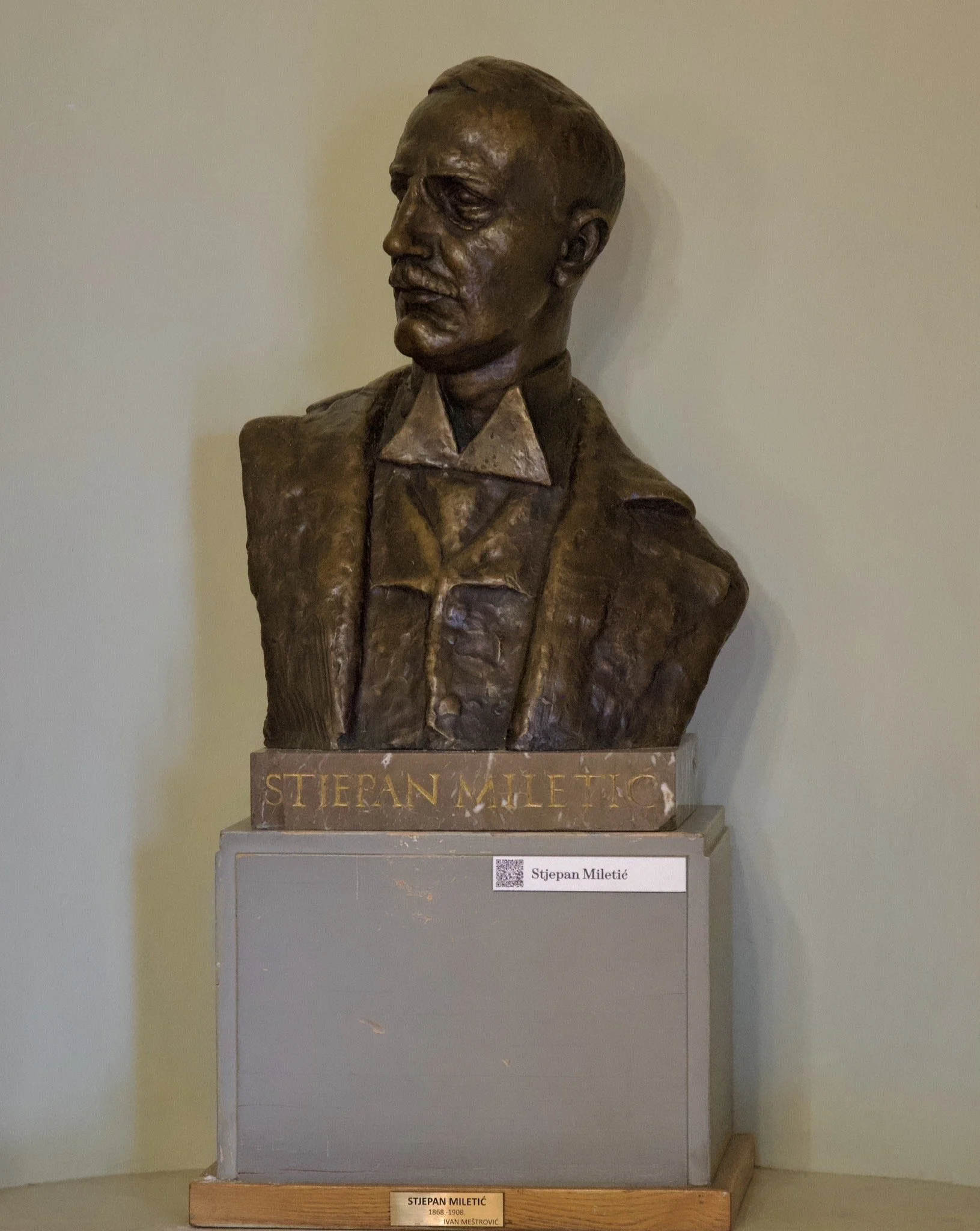
Enter stage left, Ferdinand Fellner and Hermann Helmer, the Viennese architectural duo who specialized in theaters, who designed dozens of them across Europe. Construction on Zagreb’s new theatre began in May 1894, with more than 200 workers involved, and remarkably, the building was ready for use roughly sixteen months later. Its permit was issued on October 8, 1895, and on October 14 Emperor Franz Joseph the 1st ceremonially opened it, famously giving a stone balcony post the symbolic finishing blows with a silver hammer. That evening the curtain went up on Stjepan Miletić’s Slava umjetnosti, The Glory of Art, with music by Ivan Zajc. Architecturally, the building has a neoclassical exterior wrapped around a stunning neo-Baroque interior, complete with sweeping staircases, gilding, sculptural ornaments, painted ceilings, grand chandeliers and the magnificent ceremonial curtain by Vlaho Bukovac celebrating the Croatian National Revival. The theatre is just as interesting as whatever is happening onstage. The balconies and boxes are surrounded by sculpted figures, cherubs and angelic ornaments typical of the neo-Baroque theatrical language that the designers, Fellner and Helmer, liked to use. Their idea was to include imagery intended to elevate the room from mere auditorium to a kind of temple of the arts.
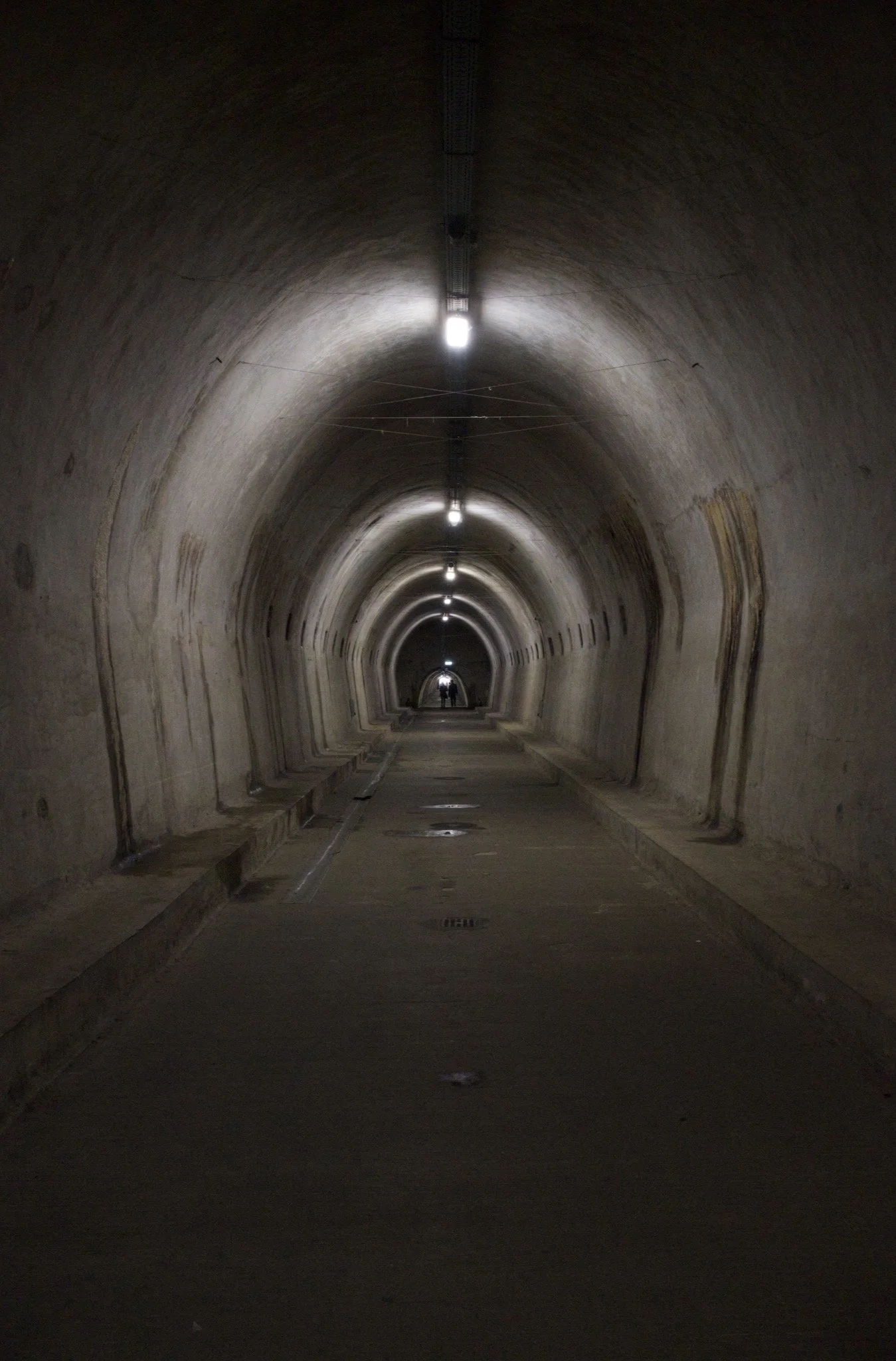
And for all that gold leaf and old-world glamour, this theatre was designed to be a heavily used fine tuned machine. The HNK’s listed capacity is at about 715. Seating options include stalls, the horseshoe boxes, galleries, balconies and the main auditorium floor. Below and in front of the stage is the orchestra pit, that rises and lowers, allowing the house to function as a true three-headed theatrical operation: Drama, Opera and Ballet. Meanwhile backstage; scenery, costumes, performers, musicians and technicians move through a building the audience only partially sees, and that unseen infrastructure is every bit as important as the performance on stage. One particularly fun feature mentioned on theatre tours is the underground tunnel connection toward the neighboring Academy of Dramatic Art complex. This serves to link the two institutions that have spent generations feeding talent back and forth, students on one side of the tunnel, the national stage on the other. The historic theatre’s limitations eventually became significant enough, however, that HNK gained an entirely new second venue, HNK2, on Božidar Adžija Street in 2025. That new 350-seat multipurpose theatre gives Drama, Opera and Ballet additional rehearsal and performance room while taking some pressure off a 130-year-old building that was never designed for a modern production calendar.
Speaking of calendars, to say the HNK is busy, would be an understatement. As I have already mentioned, the HNK isn’t just an opera house, or a playhouse, or a ballet theatre; it is all three. So that means, Shakespeare can move out, Verdi can move in and Tchaikovsky can be warming up in the hallway. The HNK stages Croatian works alongside the international classics and contemporary repertoire. In a typical season, this theatre presents at least a dozen premieres, and roughly twenty additional stage works. All in, that’s more than 220 stage performances a year. That means scenery, lighting, costumes, orchestra setups and stage configurations can change constantly, sometimes with rehearsals and performances sharing the same day. And in case you forgot there are still only 365 days in a year. That means minimal downtime to manage the logistics to keep all these performances on schedule. Over the HNK 130 years of existence, that pace puts the historic building’s lifetime performance count comfortably into the tens of thousands. The HNK doesn’t necessarily publish their statistics that way, but if the math adds up, the math adds up. And plenty of Croatia’s biggest performers have called this place home. One wonderful example is Mustafa Nadarević, who joined HNK Zagreb in 1969, he became a principal actor and remained with its Drama ensemble until retirement in 2012; among his celebrated performances was Pomet in the 1981 production of Dundo Maroje. Go further back and the opening night itself featured celebrated actresses Marija Ružička-Strozzi and Ljerka Šram.
So where does that leave the HNK today? The theatre remains Croatia’s central national theatrical institution and a major Zagreb landmark, jointly tied institutionally to the Republic of Croatia and the City of Zagreb. Its historic building has undergone major interventions over the decades, including renovations in 1937 and from 1967–69. While the much more recent post-2020-earthquake reconstruction programme expanded to the new HNK2 facility. Internationally, HNK Zagreb is well connected rather than merely locally famous: its productions appear through OperaVision, a free opera dedicated streaming platform supported by the European Union’s, Creative Europe Programe. OperaVision showcases performances like: opera, operetta, musical theatre, dance, ballet and concerts. Like right now, you can go to OperaVision, type ZAGREB in the search bar and wala, Free Opera From the HNK. This isn’t a sponsorship ad or anything, just me doing my part to celebrate the arts. But we are always listening for sponsorship opportunities. I digress… The HNK also participates in European networks including FEDORA, a Paris based non-profit that “Encourages creative renewal, inclusivity, sustainability, and digital transformation across a network of over 130 European opera and dance houses”. The HNK also hosts their own Zagreb Opera Festival, which started 4 years ago and just took place here in 2026 from September 11th to the 20th that showcased 65 performances, from both the main stage and HNK2. The next big main-stage event is already waiting in the wings: Zagreb Ballet’s 2026/2027 season which opens October 2nd 2026 with Mauro Bigonzetti’s double bill Kazimir’s Colours / Rossini Cards.
So this yellow building on Republic of Croatia Square is quite the Artsy work horse. I’ve been lucky enough to walk through the HNK on a backstage tour, through the auditorium, the balconies and behind the scenes. But touring an empty theatre is a little like touring a stadium with nobody on the field. You understand the place, but you haven’t quite experienced what it was built to do. So we’re already plotting a return trip, preferably with an orchestra tuning up below, the house lights beginning to dim and that historic stage finally coming to life. My question to you listeners out there is, have you checked out the HNK? If so what performance did you see. Tell us about it, we’d love to hear about your experience.
And that’s it for the super Slatko report.