Episode 185
Dobra večer, prijatelji.
We’ve all had an unwanted visitor in the house.
They’re cute on television, but not in the kitchen.
Let’s learn some mouse-in-the-house vocabulary!
Where’d that miš go?
Lesson
We have a new guest in the house. - Imamo novog gosta u kući.
Mouse - miš
Mom is standing on a chair. - Mama stoji na stolici.
The children are screaming. - Djeca vrište.
Where is the mouse? - Gdje je miš?
Under the refrigerator? - Ispod hladnjaka?
Behind the couch? - Iza kauča?
Inside the cabinet? - Unutar ormarića?
We’ll have to move. - Morat ćemo se odseliti.
We can get a cat or buy a trap. - Možemo nabaviti mačku ili kupiti zamku.
Super Slatko Report
In this edition of the Super Slatko Report, DJ Moe will us about Zagreb’s famous Grič tunnel. What was it used for both in the past and present day? Where is it? Join us, and let’s find out together.
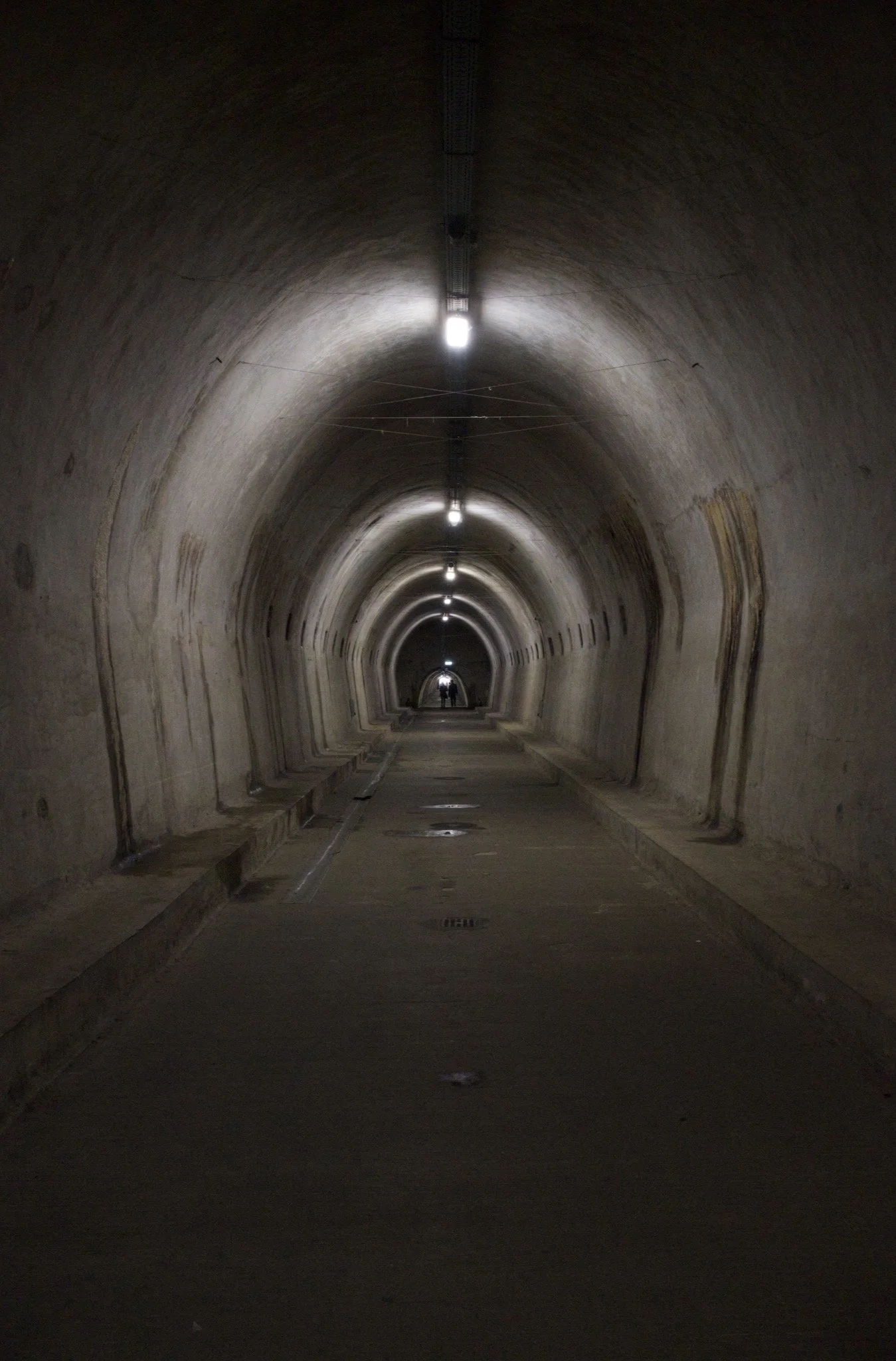
Zagreb is a city rich in history, in some places it can be found almost around every corner. This time around the history actually sits directly underneath the Upper Town neighborhood of Grič; also known as Gradec or Gornji Grad. The Grič Tunnel is a Second World War air raid shelter turned pedestrian passageway, cultural venue, and wonderfully atmospheric shortcut. Depending on which entrance you use, its closest recognizable neighbors include the Zagreb Funicular, 0.1 kilometers (0.06 miles) Lotrščak Tower, about 0.25 kilometers away, (0.16 miles) and St. Mark’s Church, approximately 0.55 kilometers away(0.34 miles). In other words, this is not some distant bunker hiding on the outskirts of town. Frič Tumnel sits directly beneath one of Zagreb’s most historic neighborhoods, quietly minding its own underground business while tourists admire the rooftops sites in the city above.
Plans for the tunnel began in 1943, when Nikola Mandić, prime minister of the Axis-aligned Independent State of Croatia, ordered a large public shelter beneath Upper Town. At this time the Second World War had shifted against the Axis powers, and Allied aircraft were striking military, transportation, and industrial targets across the region. Zagreb, then the capital of the fascist Independent State of Croatia, was increasingly vulnerable to air raids
So engineers were given the assignment, which was initially expected to take just 90 working days. Like any project one undertakes; things didn’t go according to plan. Wartime complications and inflation had other ideas, dragging construction into 1944. The main east-to-west passage runs approximately 350 meters, (1,150 feet) roughly the size of four average city blocks. Most of the tunnel is about 3.2 meters wide, (10.5 feet); but the central section opens into a hall approximately 100 meters long, (328 feet) and 5.5 meters wide (18 feet). Altogether, the complex covers roughly 2,100 to 2,200 square meters (around 23,000 square feet). The wider central space allowed for larger numbers of people to gather, while the narrower corridors moved them between the entrances.
The tunnel was intended primarily as a public bomb shelter, although planners also imagined it as a permanent pedestrian connection beneath the hill. That second idea did not win everyone over. Zagreb’s Construction Committee criticized the project in 1944, arguing that far too much attention and money were being spent on turning a shelter into a transportation link. Its original budget of approximately 141 million wartime kuna reportedly climbed to about 490 million, partly because of rampant inflation. So, even before it opened, the Grič Tunnel had achieved a proud municipal tradition: running late, running over budget, and inspiring strongly worded committee statements. Which is par for course for most city developments.
Architecturally, the tunnel resembles a long underground spine with several smaller ribs branching southward. Its main corridor connects Mesnička Street on the west with a courtyard at Radićeva Street 19 on the east. Two additional passages were planned toward Ilica and Tomić streets, while two other planned branches toward Ilica 28 and 30 were never fully completed. The narrower passages served as routes for entering, exiting, and dispersing people, while the enlarged central hall provided the main protected gathering area. Multiple exits were essential in an air raid shelter because a direct hit, fire, or collapsed building could block one route. It was less an underground boulevard than a carefully placed emergency escape network, although today it makes a very convenient way to cross beneath the hill without negotiating Zagreb’s stairs.
The shelter was intended mainly for Zagreb’s civilian population: residents, workers, families, and anyone unfortunate enough to be above ground when the sirens sounded off. The broader Gornji Grad area contained government buildings and administrative offices, so officials and government employees may also have used the tunnel when necessary, but there is no solid evidence that the Grič complex functioned as a permanent underground government headquarters or as a military barracks. Historical accounts and local legends have attached secret meetings and important political figures to the tunnel, including stories involving Ante Pavelić and later Josip Broz Tito, but these claims are difficult to verify. The best-supported description remains the least cinematic one: it was a large public shelter and connecting passage, not Zagreb’s version of an underground villain’s lair from a 007 movie.
After the war, the tunnel slipped in and out of useful employment. Repairs were undertaken in 1947 to combat moisture, and by 1949 parts of it were reportedly being used for food storage. It later spent decades largely neglected, until history called it back into service during the Croatian War of Independence, when Zagreb residents again used it as a shelter during air raid alerts. Then came one of its more unexpected career changes: in 1993 it hosted the Under City Rave, remembered as one of Croatia’s early large-scale rave events. The City of Zagreb renovated the passage in 2016, improving the floors, drainage, lighting, toilets, and safety systems before opening it to the public as a free pedestrian route. Since then it has hosted art installations, exhibitions, holiday displays, fashion events, and multimedia programs. A place built to keep explosions out, today regularly invites lights, music, and crowds in.
The Grič Tunnel began as a costly wartime shelter, designed beneath Zagreb’s Upper Town as bombs threatened the city above. Today, Zagreb has embraced it as a pedestrian shortcut, historical site, exhibition hall, and one of the city’s most unusual attractions that the city has on offer. What wartime critics considered an expensive hole beneath the hill has become a valued piece of Zagreb’s landscape. For those of you who have walked through the Grič Tunnel, what did you think? Fascinating piece of living history, convenient shortcut, or just the coolest place in Zagreb to escape a hot afternoon?
And that’s it for the Super Slatko report.