Episode 181
Bok, prijatelji!
For all of you that love to spend time in the kitchen and prepare a meal, we’ve got a great lesson for you.
Today we’ll learn some Croatian chef vocabulary.
If you’ve got a recipe from your Croati an great-grandmother, this will be perfect!
Lesson
to prepare - pripremiti
chef - kuhar
dish/meal - jelo
recipe - recept
ingredients - sastojci
prep time - vrijeme priprema
kitchen secrets - kuhinske tajne
small secrets, great master - Male tajne, velikih majstora
Super Slatko Report
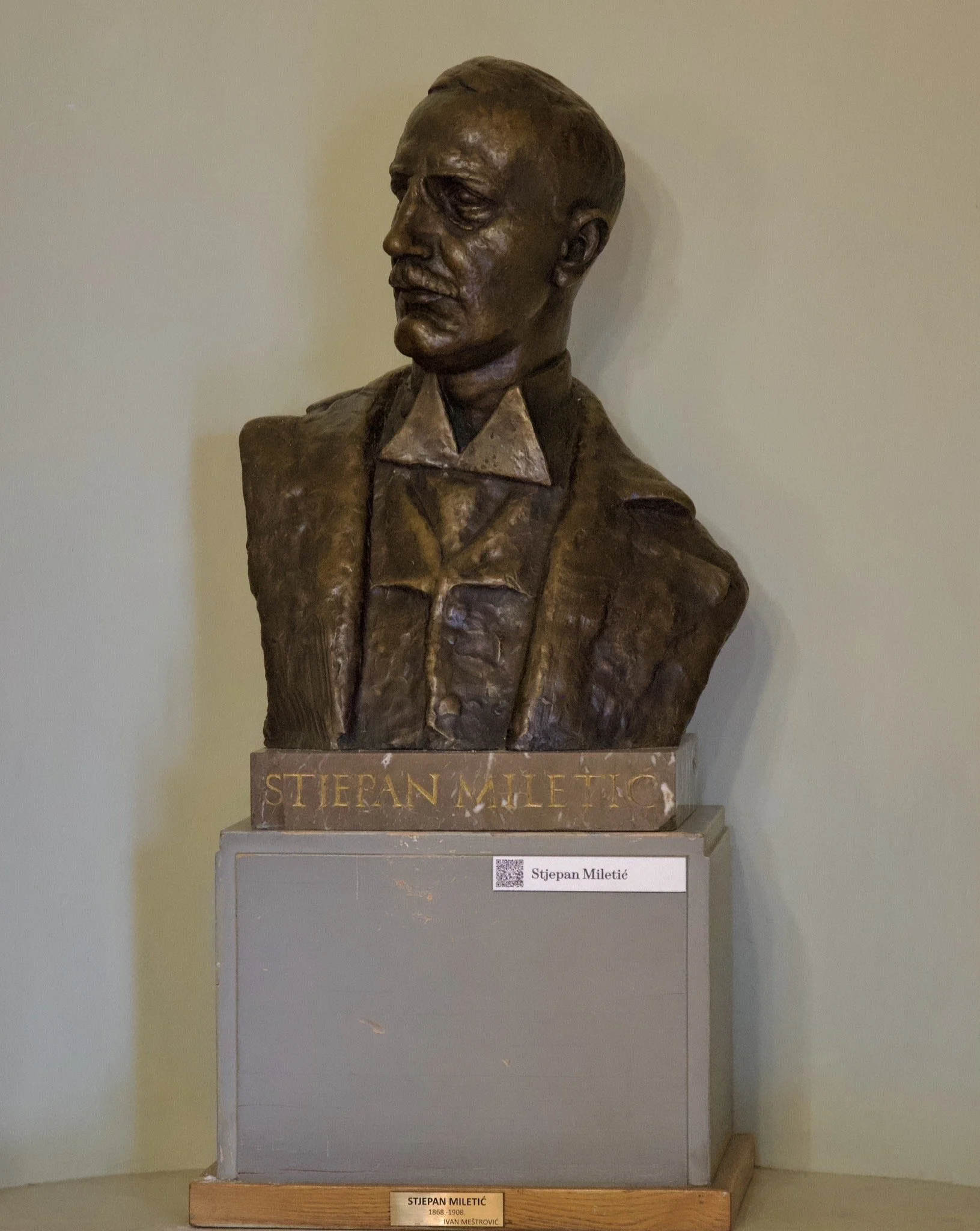
In this edition of the Super Slatko Report, DJ Moe will tell us about one of the original Croatian theater dynamos, Stjepan Miletić. We’re going back to the 19th century for this one. Get ready for some wonderful theater history!
Every great theatre has its stars, but every so often it has someone who flips the script entirely, in a positive way. Enter, stage left, Stjepan Miletić, one of the most influential figures in Croatian theatre history. A playwright, critic, director, and visionary whose work transformed the stage from a place of entertainment into a modern cultural institution. Born on March 24, 1868, in Zagreb, then part of the Kingdom of Croatia-Slavonia within Austria-Hungary, Miletić came from a respected noble family with considerable wealth and property. He lost both of his parents while still very young, but thanks to his family’s inheritance and guardians, he never experienced the financial hardships that many artists of his time faced.
Stjepan grew up during an exciting time in European history. The late 1800s were filled with industrial innovation, expanding railroads, brand new electric lighting, and a growing sense of national identity throughout Europe. Croatia was in the middle of its own cultural awakening, with writers, musicians, and artists eager to strengthen Croatian language and identity through the arts. While many young men were drawn toward politics and business; Miletić found himself captivated by the theatre. It wasn’t simply the actors that fascinated him, it was the entire production, the storytelling, the stagecraft, the direction, and the ability of a performance to preserve history. During his studies in Vienna, where he earned a doctorate in philosophy in 1893, he dove into European theatre, studying Shakespeare and modern stage practices.
Although Vienna expanded his mind, Zagreb was always his home. During Miletić’s youth, Zagreb was rapidly transforming from a budding town into Croatia’s cultural and intellectual center. New public buildings were rising, newspapers were thriving, and artistic circles were growing. Miletić attended the Classical Gymnasium in Zagreb before briefly studying law, eventually realizing his true interests lay elsewhere. His classical education exposed him to Greek tragedies, Roman literature, and the great works of European drama. Combined with Zagreb’s growing artistic community, it became the perfect opportunity for some eager individual to modernize Croatian theatre.
In 1894, at just 25 years old, Miletić was appointed the first professional intendant, or general manager, of the Hrvatsko narodno kazalište, better known as the Croatian National Theatre in Zagreb, or HNK. He landed the position despite not having any acting experience or acting aspirations, something almost unheard of at the time. Over the next four years, from 1894 through 1898, he completely reshaped the institution. He introduced structured rehearsals, standardized theatre seasons, improved administrative operations, modernized advertising, upgraded scenery and costumes, expanded technical capabilities, and even oversaw the theatre’s move into the magnificent new HNK building that visitors admire today. He also introduced electric lighting, created Croatia’s first acting school, restored a permanent opera company, organized ballet as its own artistic department, and introduced symphony concerts.
Miletić’s greatest contribution may have been his vision for what Croatian theatre could become. Rather than relying on a small collection of familiar productions, he dramatically expanded the repertoire. Croatian audiences were introduced to works by Shakespeare, Molière, Calderón de la Barca, and many other international playwrights , while simultaneously giving a platform to emerging Croatian writers like Ivo Vojnović and Ante Tresić Pavičić. He also revived beloved Croatian classics, balancing both national and international works under one roof. Beyond directing, he wrote plays, theatre criticism, librettos, and even planned an ambitious series of historical dramas about Croatian kings. Although he didn’t receive awards in the modern sense, historians widely recognize him as the father of modern Croatian theatre and one of the country’s greatest theatrical reformers.
Although Stjepan Miletić died relatively young in 1908 at just 40 years old, his influence never left the stage. Visitors to Zagreb today continue to experience the institution he helped transform every time they attend a performance at the Croatian National Theatre. Many of the professional standards, organizational structures, and artistic ambitions that define HNK today trace directly back to his efforts so many years ago. Theatre historians continue to study his writings, and his name regularly appears in exhibitions, scholarly works, and discussions about the evolution of Croatian performing arts. There is no large annual public festival devoted to Miletić, his legacy is celebrated whenever the history of Croatian theatre is told; exactly how the fam and I experienced it on a behind the scenes tour at the HNK! And what I’m doing for you now!
So what do we know about Stjepan Miletić? He wasn’t simply a playwright or a theatre manager. He was an architect of Croatian culture, someone who looked beyond the current performance and imagined what Croatian theatre could be in the future. If you find yourself in Zagreb, treat yourself to a performance inside the Croatian National Theatre. As the lights dim and the curtain rises, you’ll be witnessing a theatre that still follows the script Stjepan Miletić helped write.
And that’s it for the Super Slatko Report.