Episode 187
Ej, prijatelji.
Što radimo večeras?
What’s going on tonight? It’s cold and rainy outside.
How about we do a jigsaw puzzle?
Even better…we’ll learn some jigsaw puzzle vocabulary in Croatian!
Put on your glasses and bring some patience!
Lesson
Jigsaw puzzle - puzzle
Pieces - dijelova
It’s cold and raining outside, let’s do a puzzle. - Vani je hladno i pada kiša, složimo puzzle.
We can listen to music and drink cedevita.- Možemo slušati glazbu i piti Cedevitu.
Photograph or a painting. - Fotografija ili slika.
First, we search for the edges. - Prvo tražimo krajevi.
Don’t lose any of the pieces! - Nemojte izgubiti nijedan dio!
Oof, oh my. This is difficult. - Uf, joj. Ovo je teško.
Yay, we’re finished. - Jupi, gotovi smo.
Super Slatko Report
In this edition of the Super Slatko Report, DJ Moe tells us about Croatia’s wonderful forests. Why do they deserve our attention? Stick around and find out!
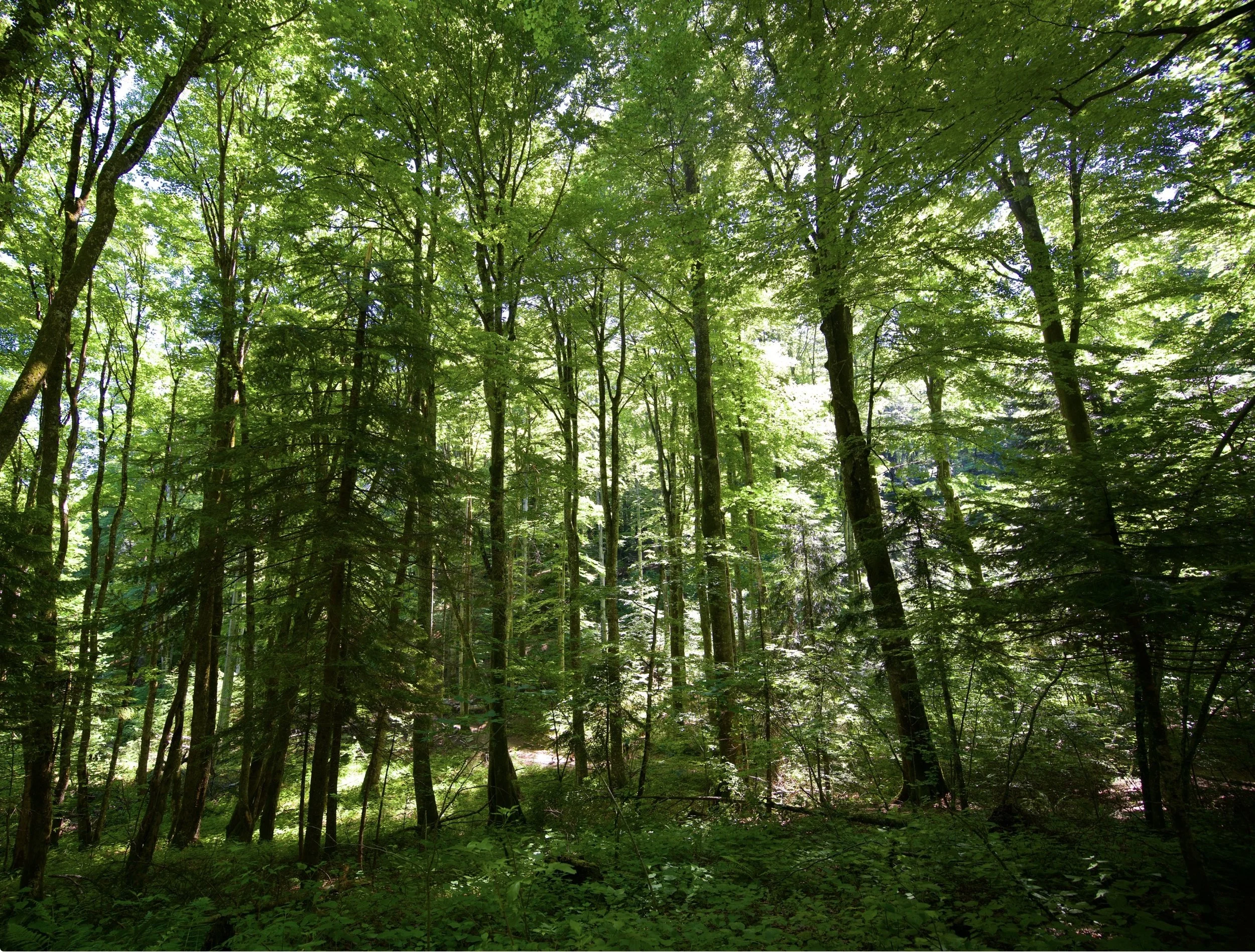
When people picture Croatia, they usually imagine blue water, white stone, and someone insisting there’s room for one more plate of food. But turn inland, or simply look uphill, and there’s another Croatia waiting in the wings: its forests. According to FSC Adria–Balkan, (a forest stewardship council for this area) forest lands occupy approximately 27,590 square kilometers, (10,650 square miles) roughly 49% of the country’s land surface. That includes woodland and scrub, so picture a whole collection of green landscapes rather than one enormous timber plantation. So that’s right, today we’re branching out from the beaches to discover what grows where, how it survives, and why Croatia’s trees deserve your attention and consideration.
I will cover each Ecoregion and give you a rundown on each. There are 4, here we go.
Btw: An ecoregion, or ecological region, is a geographically distinct area of land or water that is defined by shared environmental conditions, natural communities, and species.
Pannonian mixed forests: Start around Zagreb and northern Croatia, then head east across Slavonia toward Osijek, Vinkovci, and the Serbian border. This is Croatia’s broad continental region of plains, river valleys, and rolling hills, with approximately 30,774 square kilometers (11,882 square miles). Think hot summers, cold winters, and rainfall across the seasons, although summer drought can still cause trouble. The trees here include pedunculate oak, the famous lowland Slavonian oak, alongside narrow-leaved ash and hornbeam; and sessile oak favors better-drained hills. In southeastern Slavonia, the Spačva basin (appropriately named) is choc full of rivers and underground water helping to sustain impressive oak forests. This is the Croatia where the trees have deep roots in both the soil and the economy, quite literally oak-country.
Dinaric Mountains mixed forests: Now travel southwest from Zagreb toward Rijeka, or south toward Plitvice and the mountains behind the Adriatic. You’re entering the mountainous spine of Croatia: Gorski kotar, Lika, and much of Velebit, rather than the warm waterfront itself. Croatia’s share of this ecoregion covers approximately 11,370 square kilometers, (4,390 square miles). Here we see European beech, silver fir, and Norway spruce; which form important forests. Their layouts changing according to elevation, soil, and exposure. These are generally cooler, wetter landscapes with snowy winters.
Illyrian deciduous forests: Picture Istria and the mainland slopes and hinterland running down the Adriatic toward Dalmatia, between the hottest shoreline habitats and the colder mountain inland’s. Croatia’s mapped portion covers approximately 11,256 square kilometers, (4,346 square miles). The word “Deciduous” in this regions title simply means trees that shed their leaves seasonally. Downy oak, Turkey oak, oriental hornbeam, and sweet chestnut help cover this varied region; beech trees also appear in cooler wetter settings. The climate changes sharply with height and exposure: lower slopes have warmer, drier summers, while higher ground receives more rain and can experience frost and snow.
Mediterranean and sclerophyllous forests: Finally, imagine the sunniest coastal strip and islands, especially Dalmatia’s islands and parts of the Kvarner island landscape. These mixed forests cover approximately 3,446 square kilometers (1,331 square miles). And I know “Sclerophyllous” sounds like something requiring a prescription, but it just means vegetation with tough, leathery leaves that help conserve water. Holm oak is a key evergreen, Aleppo pine is familiar in coastal woodland, and Dalmatian black pine. Dense evergreen scrub is called maquis; lower, more open scrub is garrigue. Summers are hot and dry, winters generally milder and wetter. These communities blend into the Illyrian zone, and their boundaries follow local conditions rather than stopping neatly at a particular altitude.
Thats 4 regions of forests full of trees and vegetation, who waters all this? It’s a perfectly reasonable question, nobody is dragging a garden hose around.
Rain is the main delivery service, soaking into soil where roots absorb it.
Mountain snow stores water temporarily and releases it as it melts.
In lowland forests, seasonal flooding and groundwater provide additional supplies; a tree can have access to underground moisture even when the surface looks dry.
Fallen leaves help protect the soil and slow moisture loss, think natural mulch.
Along the limestone coast, some rain disappears quickly into cracks, so trees depend on moisture held in soil pockets and accessible rock fissures.
When underground water isn’t automatically within every tree’s reach; so coastal species survive the summer partly by conserving water
Croatia’s forests have also spent centuries working beyond the woodland. Slavonian oak is prized for durable furniture, flooring, veneer, and wine barrels, including the large casks associated with Italian winemaking. That means a Croatian forest can make an appearance in an Italian cellar without needing a passport. Over in Istria, oak from the Motovun Forest supplied timber for the Venetian fleet, connecting that river-valley woodland directly to Adriatic maritime history. And the connection wasn’t limited to wooden hulls: Paklenica’s black-pine resin, traditionally called paklina, was used to coat wooden boats. Beech contributes furniture and other manufactured products, while fir and spruce are familiar sources of construction timber for beams, roof structures, and boards.
Keeping those forests healthy takes more than promising to plant something later. Croatia uses forest-management plans, designated protective forests, and protected areas to balance timber production with soil, water, and wildlife conservation. Some forests receive much stronger protection: ancient beech stands in Paklenica and Northern Velebit national parks which belong to the international UNESCO World Heritage beech-forest site. Paklenica itself became a national park partly to protect forests threatened by overexploitation. The goal is to keep functioning ecosystems with old trees, young trees, and all the living connections between them.
For those listeners out there who want to help, one concrete Croatian initiative is Boranka, (See link below) a volunteer reforestation campaign organized by the Scout Association of Croatia with partners including Hrvatske šume and the Croatian Mountain Rescue Service. Work focuses on landscapes damaged by wildfire, particularly along the coast. Its website offers donation options and information about the campaign. Planting is one part of recovery: protecting existing forests and allowing successful natural regeneration are equally valuable. The idea is to make sure the next generation inherits more than pictures of Croatia’s forests. Let’s leave them somewhere to put down roots.
And that’s it for the super Slatko report.