Episode 164
Veliki pozdrav, prijatelji!
We conclude our Describe Yourself Series with DJ Moe!
Hopefully after this lesson, you will also be able to describe yourselves na Hrvatski.
Lesson
I’m a tall man with short black hair and I like to wear hats.
I’m married to the Doktorica and I have 2 kids, Mali Vicko and Bebasita.
I love cooking, photography, playing music and reading.
I like to eat Shabu Shabu.
My dearest sport is baseball. My favorite team is the back-to-back World Series Champions Los Angeles Dodgers.
I don’t like the Poker Face song, cilantro nor the San Diego Padres.
Visok sam muškarac s kratkom crnom kosom i volim nositi šilterice.
Oženjen sam doktoricom i imam dvoje djece, malog Vicka i Bebasitu.
Volim kuhati, fotografirati, svirati glazbu i čitati.
Volim jesti Shabu Shabu.
Moj najdraži sport je baseball. Moj omiljeni tim su uzastopni svijetski prvaci Los Angeles Dodgers.
Ne volim pjesmu Poker Face, korijander niti San Diego Padres.
Super Slatko Report
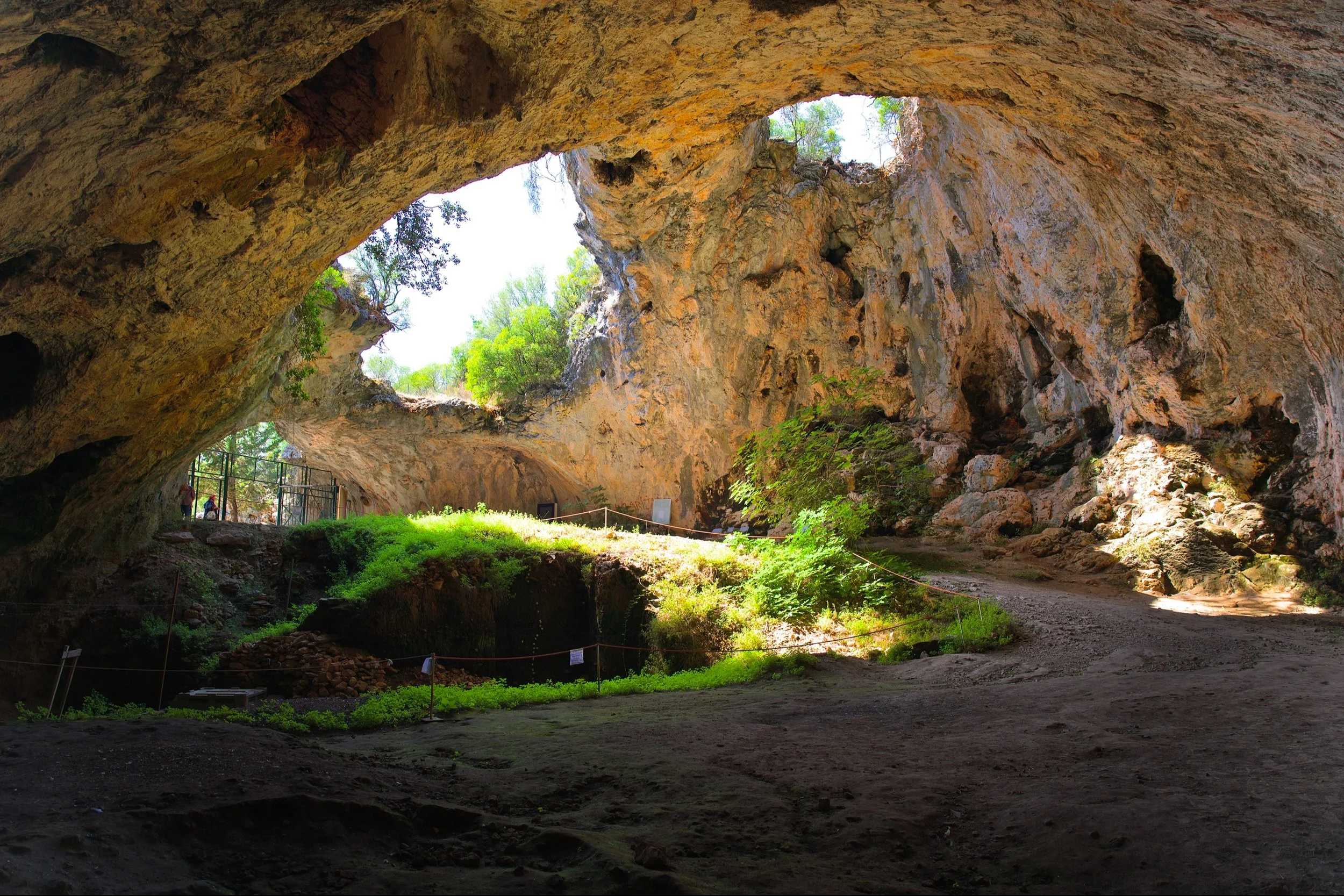
If early humans had Vela Spila as an Air BnB, Vela Spila would’ve have been “5 stars - spacious, cozy, plenty of natural light, would stay here again.” This prehistoric gem sits above the town of Vela Luka on the island of Korčula. Vela Luka literally translates to “Big Harbor,” while Vela Spila means “Big Cave.” As you can tell, locals keep their naming conventions refreshingly straightforward. What makes this caves setting so interesting is the contrast: below, a modern seaside town humming with cafés, boats, and beachgoers… and just a short climb above it, a vast chamber where people once lived 20,000 years before cappuccinos were invented.
Vela Spila is impressive in size—its main chamber is roughly 40 by 60 meters (131ft by 197ft), with a ceiling reaching up to 17 meters high (58ft). It’s perched around 130 meters above sea level (427ft), close enough to the Adriatic to catch a salty breeze but high enough to offer a picturesque view of the bay. The cave is formed mostly from limestone, typical of Croatia’s karst landscape, which practically specializes in caves, pits, and dramatic formations. Vela Spila itself sits on the slopes of Pinski Rat, part of the island’s interior highlands. The surrounding region includes smaller cavities and geological pockets, but none come close to Vela Spila is size or the archaeological finds. As for its age? The cave’s formation stretches back hundreds of thousands of years, though its human story begins during the Upper Paleolithic.
The human timeline of Vela Spila spans an astonishing list of eras: Paleolithic, Mesolithic, Neolithic, Bronze Age, and even into the Classical period. When you look out from its entrance today, the sparkling Adriatic makes it hard to imagine that sea levels were once dramatically lower—Korčula wasn’t always an island. During the Ice Age, the sea retreated, climate cooled, and animals like deer, wild boar, and possibly even larger Pleistocene mammals wandered the region. As Earth’s climate warmed and the seas rose (roughly 10,000–6,000 years ago), the coastline transformed, reshaping the island and its ecosystems. Over millennia, the region shifted from broad cold plains to Mediterranean warmth, from Ice Age wild life to the smaller island wildlife visitors we see today—lizards, birds, and the occasional goat.
Vela Spila is an Archaeologists dream. Evidence shows that people lived in Vela Spila starting around 20,000 years ago, making it one of the most significant prehistoric sites on the Adriatic. Excavations uncovered hearths, tools, pottery, animal bones, and—most famously—terracotta figurines dating back around 15,000 years, some of the oldest known ceramic art in all of Europe. These tiny sculptures, stylized and delicately crafted, shook up previous assumptions that ceramics only appeared much later in human history. Vela Spila essentially looked archaeology in the eye and said, “Actually, humans were more creative earlier than you thought.” These discoveries help illuminate the social and cultural development of late Ice Age communities in the Mediterranean.
Today, Vela Spila is a protected archaeological site, open to the public and proudly highlighted by cultural institutions in Croatia. Getting there is refreshingly doable—you can drive or hike from Vela Luka, with the hike taking roughly 45 minutes up a marked path. The cave is walk-in friendly, no special gear is required, and there’s typically a small entrance fee that supports ongoing research. The best time to visit is late spring through early autumn, when the weather is clear and the cave’s natural skylights glow beautifully. While in the area, visitors often pair the trip with the Vela Luka Cultural Center, which displays some of the artifacts found in the cave, plus the waterfront promenade and local beaches that make the town a favorite stop for island hoppers and Vela Luka itself is accessible via Ferry.
So that’s Vela Spila—a giant time capsule overlooking a peaceful modern harbor. It’s big, it’s old, and it’s full of stories our distant ancestors quite literally carved into history.
And that’s it for the Super Slatko Report.