Episode 170
Živjeli!, prijatelji!
In this lesson, we’re gonna learn one-word phrases and responses.
We can all remember one word, right?
Let’s make language-learning simple! Small building blocks! Naravno!
Lesson
thank you - hvala
excellent - odlično
sorry - Oprostite
really - stvarno
of course - naravno
cheers! - Živjeli!
too bad - šteta
horror/abomination - užas
goodbye - Doviđenja
Super Slatko Report
In this edition of the Super Slatko Report, DJ Moe takes a big dive into the deep blue sea that hugs Croatia with such pristine beauty! We’ll be hearing a lot about the big and beautiful Adriatic Sea. Join us!
The Adriatic Sea, that long, shimmering stretch of blue that separates the Italian boot from the Balkans. Geologically speaking, the Adriatic is a relatively young sea (yuh see!), born of tectonic drama during the late Mesozoic and early Cenozoic eras; roughly 100 to 20 million years ago. Before it was a sea, this region was part of the ancient Tethys Ocean basin. As the African Plate pushed northward into the Eurasian Plate, the crust buckled, and we get Alps and Dinaric Alps because of that. During this process a foreland basin formed, which gradually filled with seawater. During the last Ice Age, sea levels were much lower, and much of the northern Adriatic was dry land; you could have walked from what is now Italy to Croatia without so much as wetting your sandals (assuming you had sandals… or flip flops). When the glaciers melted around 12,000 years ago, the waters rushed back in, and the Adriatic took the modern shape we know today.
The Adriatic stretches about 800 kilometers (500 miles) from the Gulf of Venice down to the Strait of Otranto (that bit of water between the heel of the Italian boot and Albania), before spilling to the Ionian Sea that later becomes the Mediterranean. The Adriatic spans roughly 138,000 square kilometers (53,282 Square miles). It touches six countries: Italy, Slovenia, Croatia, Bosnia and Herzegovina, Montenegro, and Albania. The undisputed champion of islands in the Adriatic is our very own Croatia, boasting over 1,200 islands, islets, and reefs, though only about 50 of those 1,200 are inhabited. Italy has only a handful, like the Venetian Lagoon islands, while Slovenia has none of significant size, Bosnia and Herzegovina have no true islands either, Montenegro has a few small ones, and Albania very few as well. A few major rivers feed the Adriatic, the most influential being the Po River from Italy, which delivers vast amounts of freshwater and sediment into the northern basin. From the Balkan side of the map, rivers such as the Neretva (from Bosnia and Herzegovina & Croatia) and others in Albania and Montenegro also contribute.
The Adriatic has an average salinity content around 38 parts per thousand, higher than the Mediterranean as a whole and higher than most Seas in the world. Its saltiness is a product of strong evaporation under Mediterranean sunshine combined with relatively limited freshwater inflow compared to its size. And yes, that salinity provides great buoyancy when compared to something like a freshwater lake.
Does the Adriatic have any techtonic plate activity? It sure does. The Adriatic sits atop the complex boundary between the African and Eurasian tectonic plates. It’s not volcanically active per se, but it is tectonically active; but earthquakes do occur along the Dinaric fault. systems. And its deepest point, is in the South Adriatic Pit, which plunges to about 1,200 meters (3,937 feet).
What about the creatures, both imagined and real. Back in the day Venetian sailors once whispered of sea serpents and colossal beasts stirring beneath the foggy northern waters. Along the Dalmatian coast, tales told of mysterious lights, mermaids and monstrous shadows below cliffside villages. Montenegrin and Albanian lore spoke of dragons or water spirits guarding hidden coves. But the real cast of Adriatic creatures is pretty amazing on its own. In the Adriatic you’ll find:
bottlenose dolphins,
striped dolphins,
and occasionally fin whales
Loggerhead sea turtles
blue sharks
shortfin mako sharks in deeper waters,
bluefin tuna,
shrimp
anchovies,
sardines, and
calamari.
One unique resident worth noting is the critically endangered Mediterranean monk seal, which still finds refuge along remote stretches of the Croatian coast.
Did you know the Adriatic is a mood setter for the entire region? In winter, cold continental air masses over the Sea and sweeping down from Central Europe, producing the fierce Bura wind (aka Bora), particularly affects Croatia, Slovenia, and northeastern Italy. In contrast, the warm, humid Jugo (aka the Sirocco) blows northward from North Africa, bringing low-pressure systems and heavy rain to Italy and the Balkans. Summers over the Adriatic are dominated by stable high-pressure systems, delivering those postcard-perfect blue skies that we know and love.
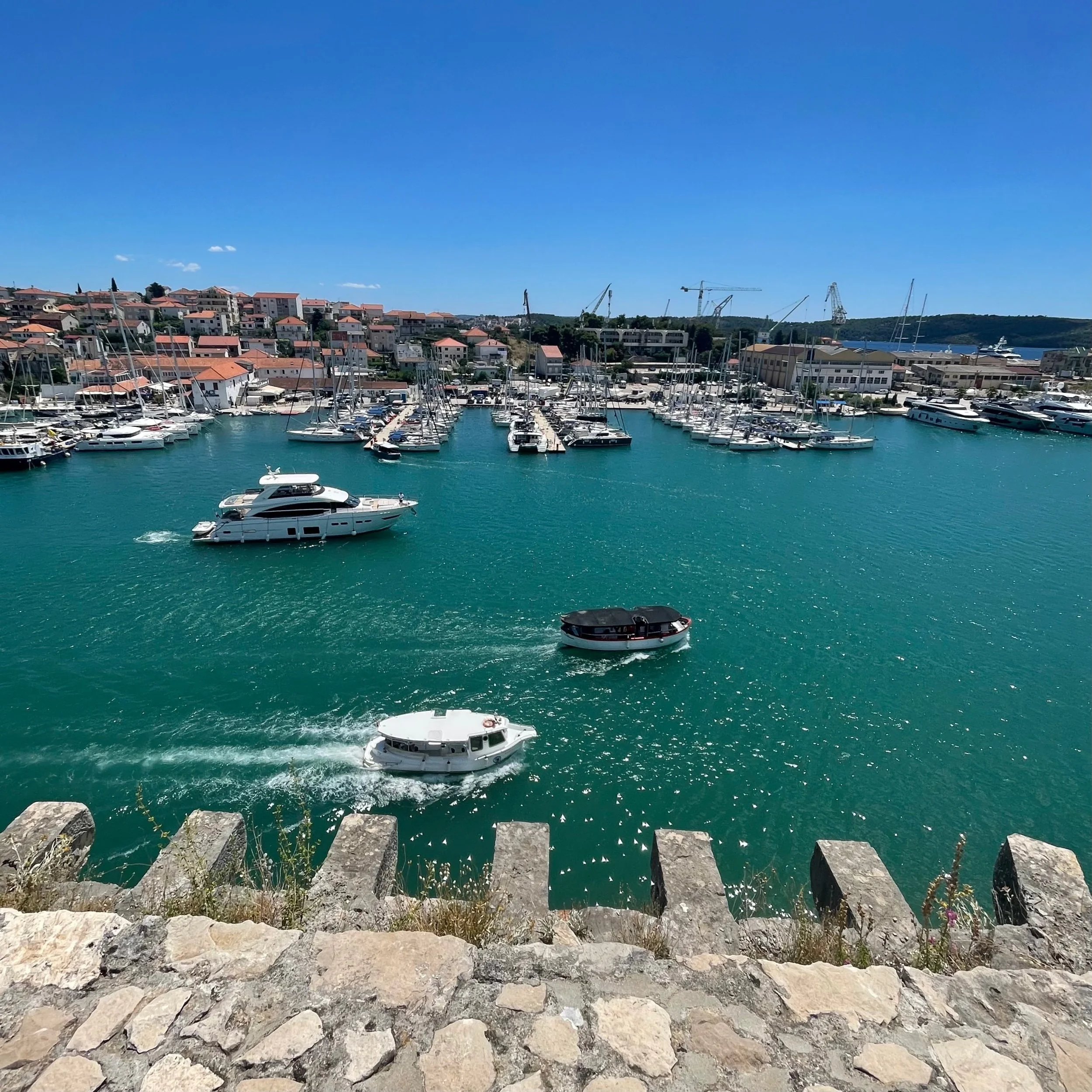
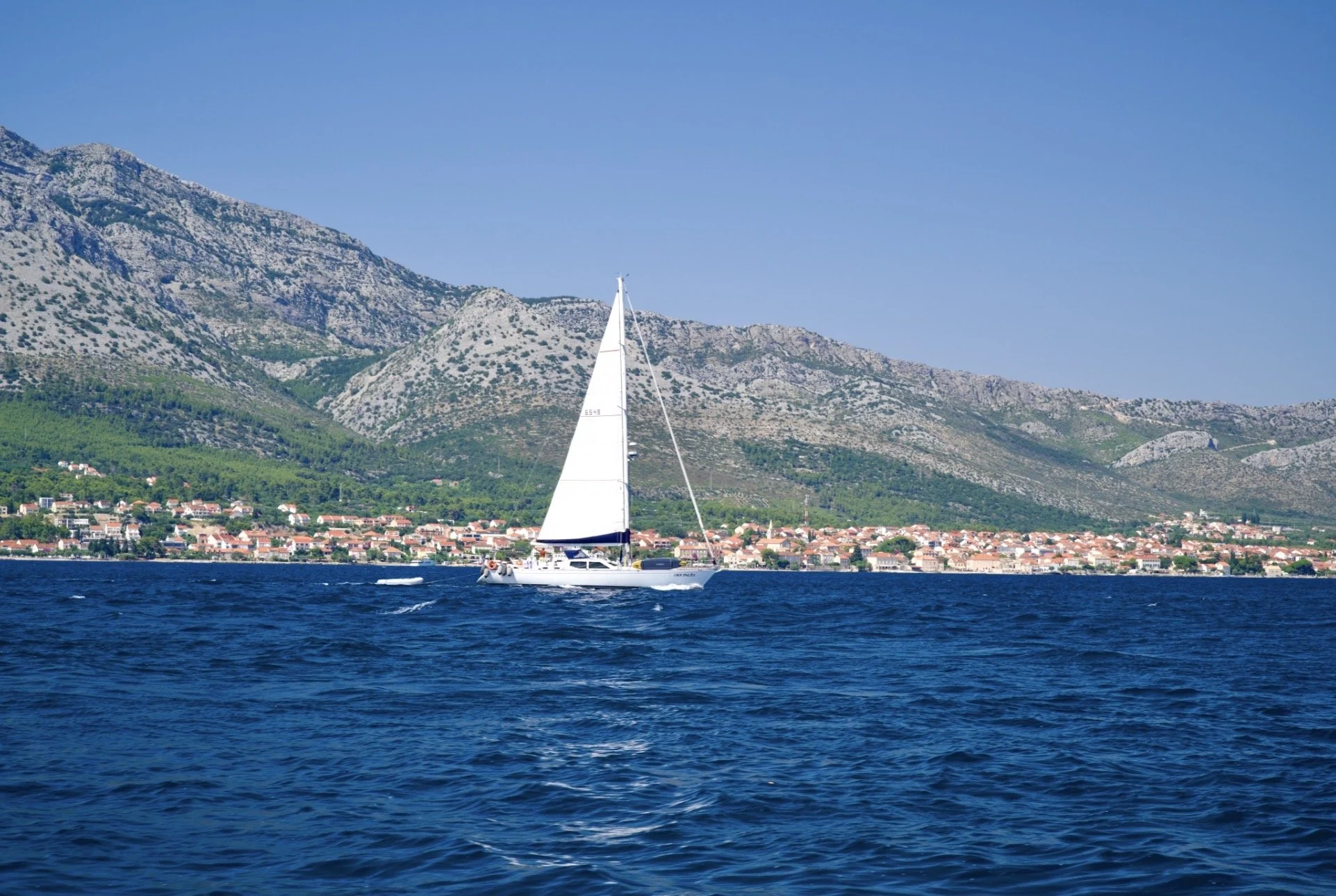
And how does this benefit Croatia? The Adriatic is Croatia’s economic engine: tourism, maritime trade, fisheries, and shipbuilding all revolve around it. Croatia’s indented coastline, one of the most articulated in the world, creates thousands of sheltered bays and natural harbors that other Adriatic countries simply do not possess at this scale. Its limestone geology produces crystal-clear waters due to minimal sediment runoff. That clarity, combined with its many islands, gives Croatia a nautical tourism advantage unmatched in the region. The sea is not just pretty scenery; it’s equal parts infrastructure and identity.
And thats it for the Super Slatko Report.